A first home gym, in the order it should be bought
Nearly every home gym is bought in the wrong order. The bar arrives before anything to rack it on; the bench arrives before there is anything to press. This page puts four purchases in the sequence that keeps each one usable on the day it arrives, and every figure below is already published on the review it points to.
One — loadable dumbbells. A pair of bars and a stack of plates covers
pressing, rowing, squatting and carrying from the first session. Nothing else
has to exist first.
Two — an adjustable bench. With dumbbells already in the room, a bench
immediately doubles what they can do: incline, decline, supported rows. On its
own it does nothing.
Three — a barbell. Now the bench exists to press it on and the plates exist
to load it with. Bought earlier, it waits.
Four — a rack. The purchase that only makes sense once the bar is heavy
enough that lifting it into position is the hard part.
What to check on each
Each review page below lists what its maker publishes and what it does not. The
recurring absences across these four shelves are worth knowing before reading
any of them:
On dumbbells, the bore and the handle diameter — which decide whether
plates already owned will fit.
On benches, the pad width and length, absent from most of that shelf.
On barbells, the loadable sleeve length.
On racks, the inside width and inside depth, which decide whether the
bench fits between the uprights.
What this page does not do
It does not say how much weight to buy, and it does not say that any of these
products is safe. Every load figure on this site is a number a manufacturer put
in writing, reported with its source named.
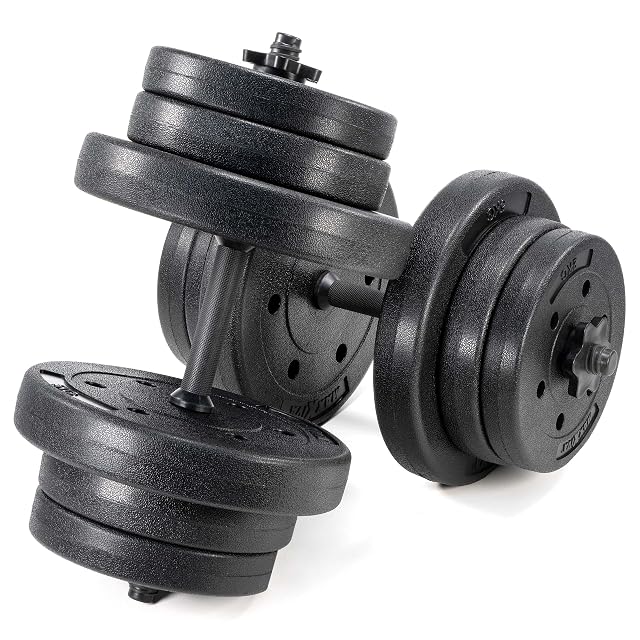
A 40 kg spinlock pair sold on floor protection as much as on load: cement-filled plastic plates, cross-knurled handles and four star collars. The plates are the reason it is cheap and the reason a bar fills up early.
Best for: A first pair where the floor matters and the total never needs to be high
Because a loadable dumbbell set needs nothing else to be useful on the day it arrives. A barbell needs plates, collars and something to rack it on, and until all four exist it sits in a corner.
Does the bench really come before the bar?
For pressing, yes — a bench with 10 adjustable back positions is usable with dumbbells alone. Bought after the bar, it spends weeks as the missing piece.
Is a rack necessary at all?
Only once the bar is heavier than it can be lifted safely into position. That is the point at which a rack stops being furniture and starts being the thing that lets a session happen alone.
Useful comparisons
Head-to-heads already published between two models from this guide or this aisle.
The models here come from the catalogue of this site. Specifications are those published by the manufacturer and on the Amazon product page; prices are what Keepa reported on the date below, and both move. The ranking uses declared specifications, the balance of stated strengths and limitations, and price. No product on this site has been physically tested, and nothing here claims otherwise.
Last checked on
The tool we use ourselves
Decided what to buy? Check the discount is one.
Training equipment is discounted over and over through the
year — hardest of all in the weeks after the January rush, which is
exactly when most of it stops being bought — and a struck-through
figure on its own says nothing whatever about what the same model was
charged at four weeks ago.
UniverTrack keeps a week-by-week record for each
retailer, so a reduction gets measured against a figure somebody really
paid rather than one invented for the campaign — and it says when the
moment to order has actually arrived.
Real price historyBuy-now alertsAI buying assistant