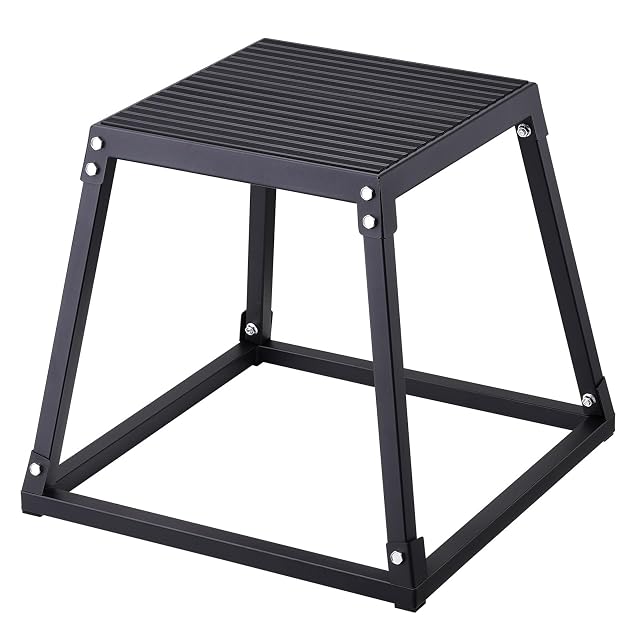
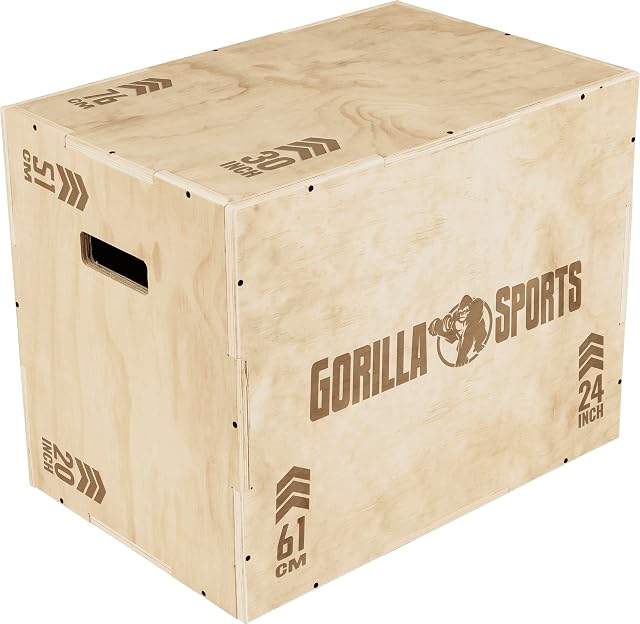
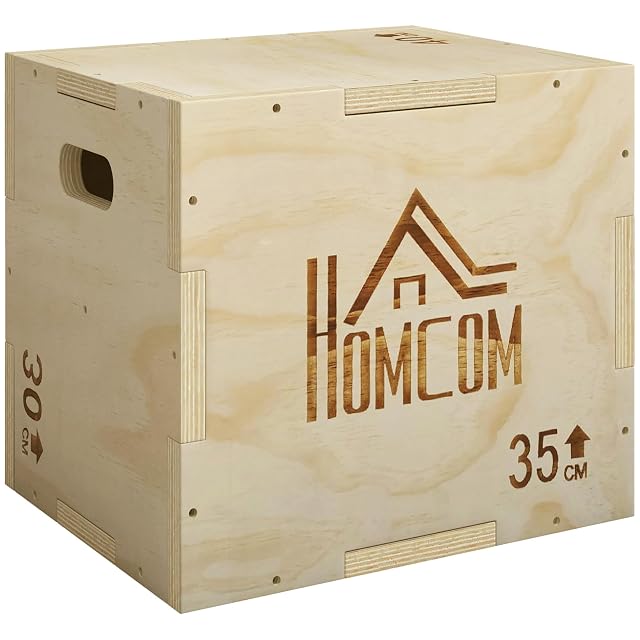
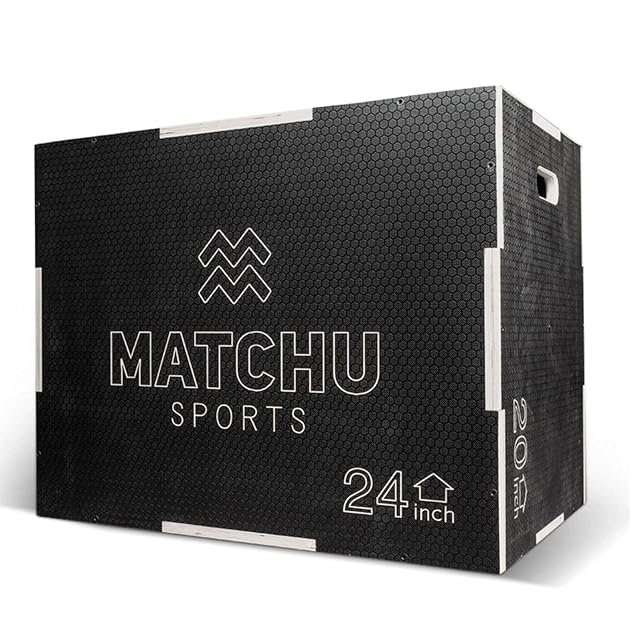
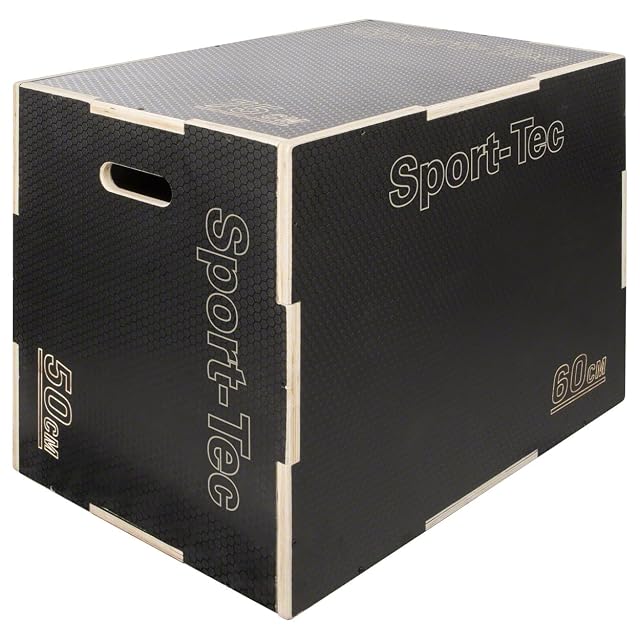
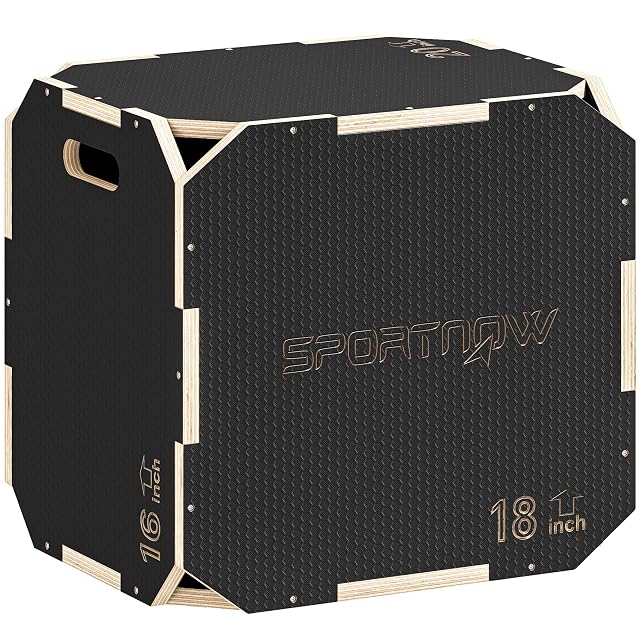
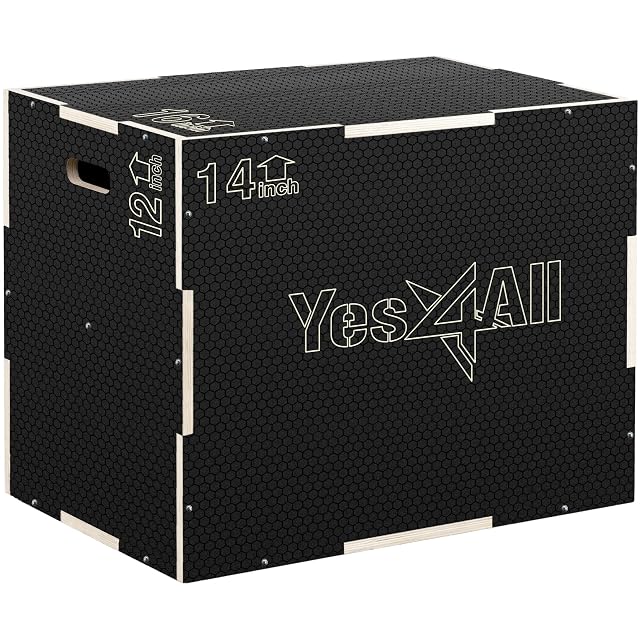
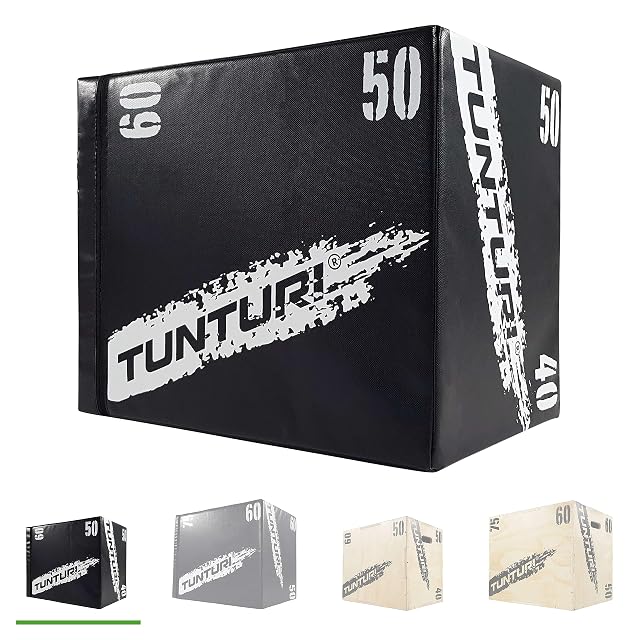
Three heights in one box, and edges that decide the shin
The best plyo boxes for 2026
A plyo box is jumped onto, which makes it the one item on this shelf where a failure is an injury rather than a disappointment. The standard article is a three-in-one: a rectangular box that gives three heights depending on which face it rests on, commonly 50/60/75 cm or 40/50/60 cm. The heights are published and they are the specification. The second figure is the load rating, and it should be read as a dynamic figure — a person landing on a box loads it with several times their body weight for an instant, and a rating quoted without saying whether it is static or dynamic is quoting the easier number. Then the material, which splits the shelf cleanly. Wood boxes are the traditional article: rigid, heavy, and unforgiving of a missed jump. Foam boxes with a vinyl cover cost more, weigh less, and are the ones that do not open a shin when a jump falls short — which is the failure mode that actually happens. Steel boxes exist and are usually fixed-height. The top surface needs grip, and the good ones state a non-slip treatment rather than showing a photograph of one. Edge treatment — a chamfer or a radius on a wooden box, a soft edge on a foam one — is the detail that separates a box designed for jumping from a box designed for a photograph. And assembly: most wooden boxes arrive flat and need bolting, and the quality of that hardware is what the review has to look at. We compare heights, top surface, material, load rating and load basis.